
Providence Schools Forward

Overview

The Johns Hopkins Report

After years of data showed persistently low student achievement in the Providence Public School District (PPSD), in 2019, the Johns Hopkins Institute for Education Policy conducted a comprehensive review of the district to better understand the root causes behind those concerning outcomes.

Using direct observations and interviews, reviewers found deep systemic challenges that were limiting student success. The final report highlighted that teachers felt unsupported and demoralized, students were not consistently learning near grade level, families often felt excluded from their children’s education, school leaders lacked the tools and resources needed to drive improvement, and buildings across the district were deteriorating and often unsafe. The findings made it clear that significant, system-wide change was needed to improve outcomes for PPSD students. 

With the support of the Rhode Island Department of Education, this is what has been achieved since then.

“We needed to address the culture of not coming to school.”
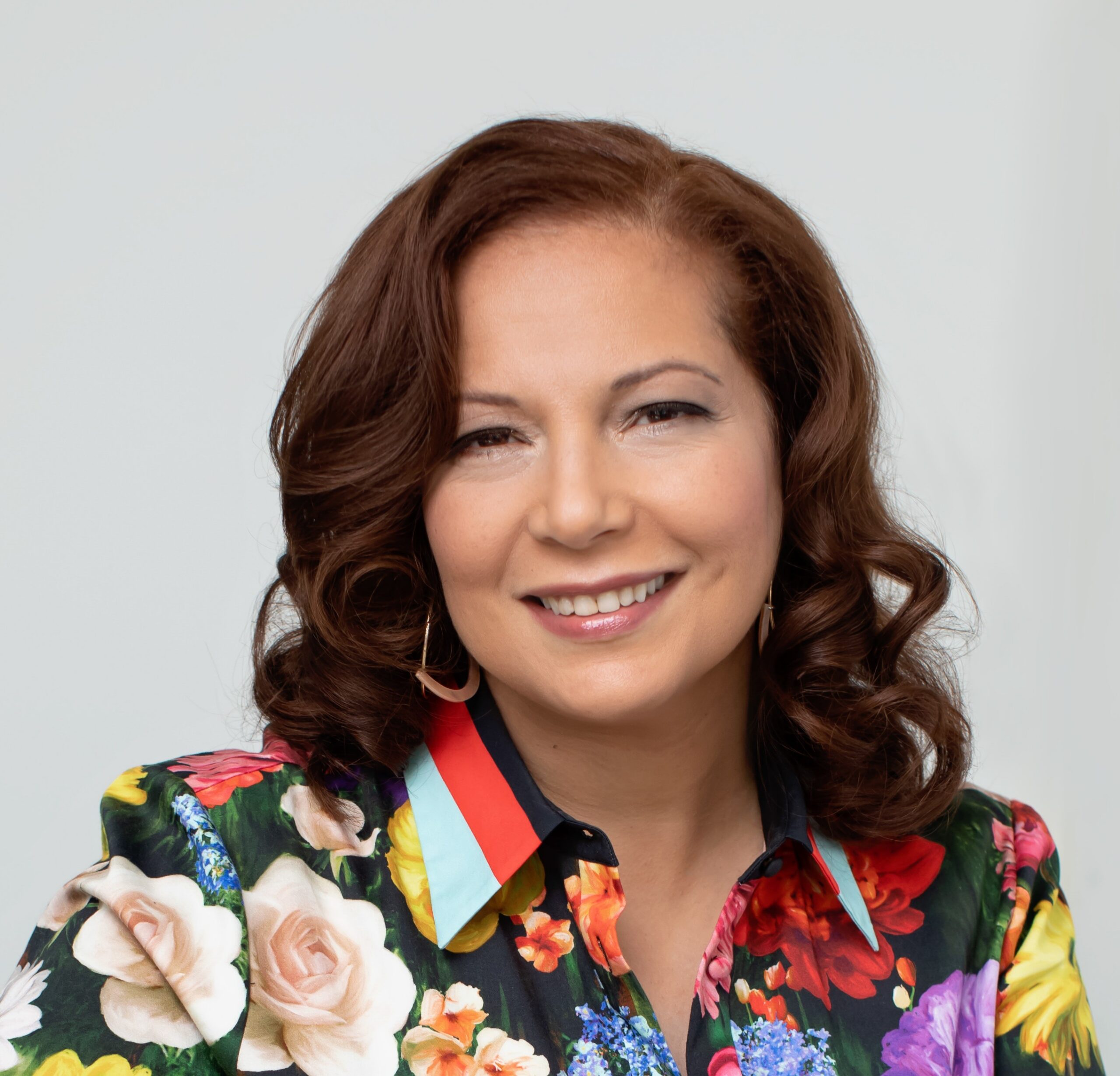
Angélica Infante-Green
Rhode Island Commissioner of Education

What The Report Said

A lack of adequate early childhood education opportunities left Providence families without access to early learning and limited students’ access to strong academic foundations.

  • “Instruction was characterized by very low cognitive demand and minimal student engagement.” 
  • “Achievement declined as students progressed through grades.”

What PPSD and RIDE Did

PPSD expanded access to high-quality early education for students by nearly doubling Pre-K capacity, improving program quality, and standardizing early literacy instruction to better prepare students for kindergarten. 

RIDE, PPSD and the City of Providence are using a comprehensive framework for implementing Pre-K-8 schools that considers curricular, instructional, social and community factors.

What Was Achieved

940 Pre-K seats were available for the 2025-2026 school year, up from 352 seats pre-intervention. 

In 2022, Young Woods Elementary School Pre-K program received a 5-star rating from quality rating and improvement agency BrightStars.

In 2024, Harry Kizirian Elementary Pre-K was the second school in the district to receive a five-star rating.

What The Report Said

Multilingual learners did not consistently receive the services and supports they needed.

  • The district “failed to provide consistent and adequate services to English Language Learners.”
  • “In some of the elementary schools, there was no bilingual staff member present in the main office.”

What PPSD and RIDE Did

PPSD strengthened support for multilingual learners by expanding dual-language programs, increasing the number of ESL and bilingual-certified educators, and investing in interpretation and translation services for families. The district also transformed its multilingual model to ensure students were being taught based on their strengths.

What Was Achieved

PPSD successfully exited Department of Justice monitoring, expanded dual-language opportunities from 1,065 to 1,968 seats, and increased the percentage of educators with ESL or bilingual certification from 17% to more than 36%. Multilingual learners also achieved stronger academic outcomes, with recently exited students reaching a 37.6% proficiency rate in English Language Arts and outperforming the general student population.

What The Report Said

PPSD lacked a rigorous, standardized curriculum.

  • “There was a different textbook in every classroom.”
  • “The review team found no coherent curriculum.”
  • “We don’t have a curriculum. No two teachers on the same page in this district at the middle level.”

What PPSD and RIDE Did

PPSD unified core instruction across the district by implementing a high-quality, culturally relevant curriculum, launching a centralized learning management system, and expanding instructional coaching and literacy support for students. In partnership with educators, families, and community members, the district redesigned the academic programs of five secondary schools based on the needs of students.

What Was Achieved

PPSD schools have transformed from fragmented and inconsistent to unified and award-winning. 

In the past two years, three PPSD schools, Bailey Elementary School, Martin Luther King Jr. Elementary School, and Classical High School, have been honored as Blue Ribbon Schools, a recognition reserved for schools that demonstrate the highest levels of academic achievement and a deep commitment to closing opportunity gaps for all students.

What The Report Said

Access to advanced coursework and career pathways was lacking and uneven across schools.

  • “Advanced opportunities were unevenly available across schools.”
  • “There isn’t enough rigor. Students aren’t supported in challenging work or in advanced programs.” 
  • “Access depended more on the school a student attended than system design.”

What PPSD and RIDE Did

PPSD radically scaled and restructured its Career & Technical Education pathways and built a state-leading talent pipeline that places graduates directly into competitive, high-wage positions.

What Was Achieved

PPSD is rapidly expanding access to career pathways for students and is on track to nearly double RIDE-approved CTE programs by next school year compared to before the intervention. 

For the first time, 100% of high schools will offer at least one approved program aligned to high-demand, high-wage fields.

By expanding to 29 active CTE programs and redesigning its pathways, PPSD has driven program completion from 3% to 42%, secured a perfect 100% graduation rate for CTE Seniors, and placed 98 CTE students into intensive, 100-hour paid internships in competitive industries. 

What The Report Said

Academic outcomes were not improving, and the district was struggling to deliver the results students deserved.

  • “Across the grade levels, a full 90 percent of students are not proficient in math, and a full 86 percent are not proficient in English Language Arts.”
  • “The children are not challenged to achieve their full potential, and the teachers seem to be beaten down and exhausted by their work. There is no joy of learning. My child only knows instruction through worksheets.” -PPSD Parent

What PPSD and RIDE Did

PPSD created a stronger pathway to graduation by expanding access to Advanced Placement, dual enrollment, early college, and Career and Technical Education programs while improving academic supports for students and attendance systems. The district also established clear graduation goals, aligned instruction to student needs, and strengthened supports for student well-being to help more students stay on track to graduate.

What Was Achieved

In 2024, PPSD’s four-year graduation rate reached an all-time high, with the difference between the PPSD graduation rate and the statewide graduation rate being cut by more than 50%.

More PPSD students than ever are taking AP exams. During the intervention, Advanced Placement (AP) exam participation by PPSD students increased by 10.5%, and the pass rate grew from 33% to 56%. 

“[Our educators] are looking at the data, they understand the data, and they're engaged in professional learning so that their professional growth is continuing and they're not satisfied with the status quo."
Paula Dillon
Deputy Superintendent of Academics

What The Report Said

Schools faced shortages of talented, certified teachers and struggled to recruit and retain staff.

  • “There are chronic shortages of properly certified teachers… leaving students without coherent instruction.”
  • Bad teachers in the district are “reshuffled…They just make the rounds every year. It’s a toxic dynamic.”
  • “There were widespread accounts of low teacher morale (with exceptions), with multiple expressions of teachers feeling underappreciated, stressed, and anxious.”

What PPSD and RIDE Did

PPSD transformed its hiring practices by expanding educator pipelines, shifting its hiring timelines, and offering financial incentives for hard-to-fill roles. At the same time, the district began hiring for new positions, such as instructional coaches, more guidance counselors, and school culture and community support roles.

What Was Achieved

Through improved systems and practices, PPSD drastically drove down teacher vacancies to a historic low of just 71 openings at the start of the 2025–2026 school year, and doubled the district’s ESL and Bilingual/Dual Language instructional capacity—increasing certified, active teachers from 17.5% to over 36%.

What The Report Said

Teachers were not provided with the resources and training they needed to lead rigorous instruction.

  • “Without PD, teachers often use older curricula, and mixtures from all over including the internet.”
  • “‘We use what we can find,’ said an elementary school teacher in a group interview.”
  • “Teachers told us that the lack of supports was hurting children in their school. In one school, teachers remarked that ‘they have third graders who have already given up and checked out.’”

What PPSD and RIDE Did

To better retain and support staff, PPSD provided structured feedback opportunities, such as “learning walks” with principals and teachers, created a unified compliance guidebook for specialized instruction, and modernized human resources with fully digital tools that streamlined hiring and onboarding. The district also expanded professional development opportunities, instructional coaching, and academic support roles to ensure teachers had the resources and training needed to deliver high-quality instruction to students.

What Was Achieved

PPSD successfully drove down the teacher vacancy rate and increased teacher retention between last year and this year by 6%, demonstrating the improved support and encouragement teachers receive.

“We made the shift from talking about challenges to talking about possibilities.”
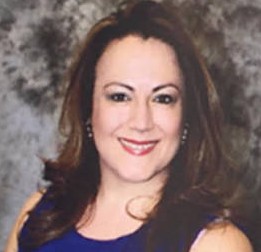
Carina Pinto de Chacon
Chief of Family & Community Engagement

What The Report Said

Families often felt disconnected from decision-making and communication with schools.

  • “Most parents feel shut out of their children’s education.”
  • “I don’t feel like anyone is listening unless we scream.” – PPSD parent
  • “The lack of parent input was not only striking but widely accepted as normal.”

What PPSD and RIDE Did

To strengthen family and community engagement, PPSD expanded the Parent Advisory Council (PAC), invested over $1M in multilingual communication services, and launched new tools that made it easier for families to connect with schools and district leaders. The district also developed parent leadership programs, community forums, and ambassador initiatives to ensure families, students, educators, and community members have a meaningful voice in shaping district priorities.

What Was Achieved

Thanks to improved communication systems and investment in translation and interpretation services, PPSD has made native-language communication a baseline standard, so every family member’s voice can be heard. PPSD also graduated four distinct cohorts from the Parent Leadership Academy, engaged approximately 400 community stakeholders on district-wide decisions, expanded the Parent Ambassador volunteer program from 30 schools to all 40 schools, and earned AASA and National PTA recognition for embedding family engagement into district strategy and systems.

What The Report Said

Chronic absenteeism was widespread, and the district lacked consistent systems for communicating with families, and monitoring and improving attendance.

  • “In one school, our team was told that ‘10% of the classes are missing every day, with two to three tardies on top of that.’”
  • “Teams were told that PPSD appeared to exercise ‘no accountability’ towards schools on this issue.”

What PPSD and RIDE Did

To combat chronic absenteeism, PPSD drastically improved its family outreach strategies, created data-driven tracking systems to monitor attendance and send alerts to parents, and encouraged student attendance through student-centered campaigns and special recognition events celebrating attendance wins.

What Was Achieved

PPSD reduced chronic absenteeism by 8 percentage points compared to pre-pandemic levels and by 27.8 percentage points from its pandemic peak, restoring more than 1.3 million instructional hours and achieving the largest reduction in chronic absenteeism in Rhode Island. A key driver of this progress has been a stronger sense of school belonging, with the percentage of students who report feeling connected to their school increasing from 40% to 62%.

“Warm, safe and dry in every building is the floor.”

Zachary Scott
Deputy Superintendent of Operations

What The Report Said

School facilities were in poor condition, with some buildings described as unsafe or inadequate for learning.

  • “In all but one school, the buildings were in very poor—and in one, absolutely dire—condition.”
  • “Teachers do not feel safe in school; students do not feel safe in school.”

What PPSD and RIDE Did

PPSD launched an unprecedented $1 billion-plus capital plan to transform school facilities, modernize financial systems, expand access to high-quality learning environments, and ensure every student has access to a new or like-new school by 2030. The district implemented a student-based, equitable budgeting approach and redesigned long-term capital planning and data systems to maximize the impact of every dollar invested.

What Was Achieved

Student access to modern learning environments increased from just 5% to 55%, with six new or like-new schools already opened and twelve more projects underway. These investments have transformed dysfunctional, aging facilities into modern learning environments, featuring updated classrooms, media centers, wellness hubs, arts spaces, and other resources that support student success.

What The Report Said

A lack of reliable, safe transportation prevented student safety and success. 

  • High School “students are unable to participate in after-school programs because no transportation is available.”

What PPSD and RIDE Did

PPSD has made transportation safer, more accessible, and more reliable for students by expanding bus access, enhancing safety measures, introducing eco-friendly vehicles, providing real-time bus tracking, and streamlining transportation operations to increase reliability and reduce barriers to participation.

What Was Achieved

Over 1,700 additional students now have access to bus passes, helping to improve attendance and participation in afterschool activities and sports. PPSD has installed stop-arm and interior safety cameras on 144 school buses, and introduced Rhode Island’s first four electric school buses. Families now have access to FirstView and ParentSquare to track bus locations and secure delivery of bus passes.